
Kostava EQ
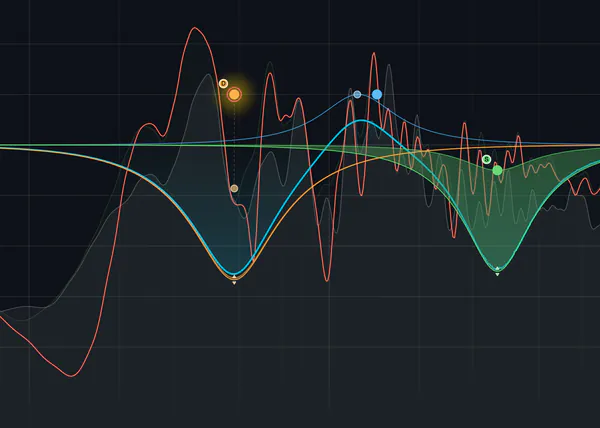
A precision equaliser with dynamic bands, LFO modulation and four snapshots.
- Dynamic EQ
- Mid/Side
AU · VST3 · Standalone
Georgia
43.1° N · Svaneti
42.7° N · Mkinvartsveri (Kazbek)
41.9° N · Guria to Kakheti
Sakartvelo · Georgia · 42.2° N 43.5° E
Georgia lies on the eastern shore of the Black Sea, under the Caucasus, and its songs are sung in parts. Kostava Creative brings that sound into your DAW.
Sound: our panduri samples
Map data: Natural Earth. Caucasus terrain produced using Copernicus WorldDEM™-90 © DLR e.V. 2010-2014 and © Airbus Defence and Space GmbH 2014-2018 provided under COPERNICUS by the European Union and ESA; all rights reserved. The organisations in charge of the Copernicus programme by law or by delegation do not incur any liability for any use of the Copernicus WorldDEM™-90.
A globe showing Europe and western Asia. Georgia lies on the eastern shore of the Black Sea, south of the Greater Caucasus mountains, with the Caspian Sea further east.
Georgians have traditionally sung in parts, at the table, in the fields and in church, three voices and sometimes four. There are at least fifteen regional styles.
Svaneti
Dense, ancient-sounding harmony, still sung in an old tuning that is not the piano’s.
Guria and Samegrelo
Three voices weave around each other. In Guria the top voice yodels: the krimanchuli.
Kakheti, Kartli and the eastern mountains
In Kakheti and Kartli a long drone bass holds the ground while two soloists sing above it. In Pshavi, Khevsureti and Tusheti, songs and verse are sung to the panduri.
Instruments work the same way: three-voiced construction is the most common texture in Georgian instrumental music.
Seen from the south, the Caucasus is a waveform.
Three ridges. Three voices.
Georgian sound
One voice begins the song.
mtkmeliA second voice answers it.
modzakhiliThe bass holds the ground.
bani42.7° N · Mkinvartsveri (Kazbek), 5,054 m
Every micro-sample has to tell the truth about the instrument.
If it doesn’t sound like the Caucasus, we go back to the mountains.
We started with the panduri. Open it ↓
Opening the panduri
Village panduris have seven wooden frets to the octave, in steps of about 171 cents. Thirds and sixths land between major and minor.
Seven-step village fretting · Tsereteli & Veshapidze 2014; Gelzer
Panduri plays in standard tuning out of the box. Georgian tuning is a switch.
| Interval | 12-TET | Gelzer 7-EDO | Erkomaishvili harmonic |
|---|---|---|---|
| Second | 200 | 171 | 191 |
| Third | 400 / 300 | 343 | 355 |
| Fourth | 500 | 514 | 515 |
| Fifth | 700 | 686 | 707 |
In 1934, Vashakidze’s orchestral panduri took twelve metal frets. Village panduris kept seven wooden ones.
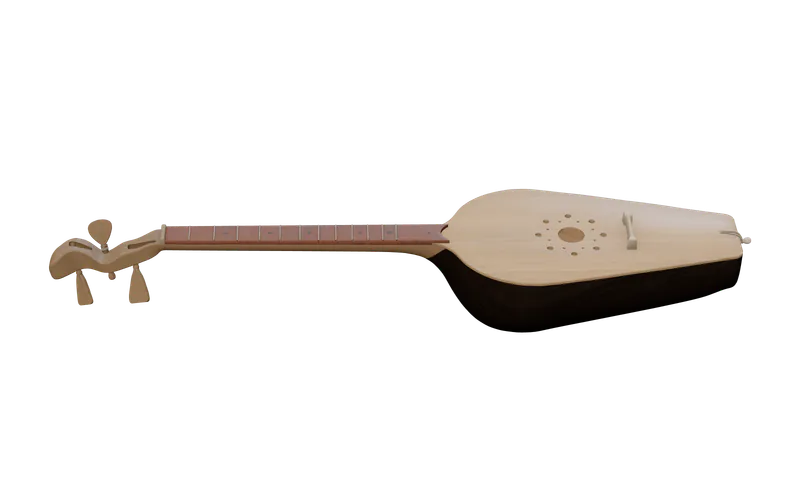
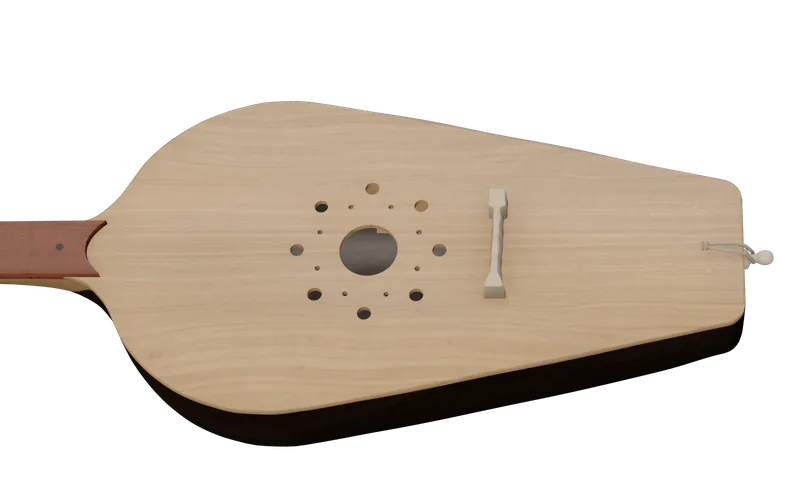
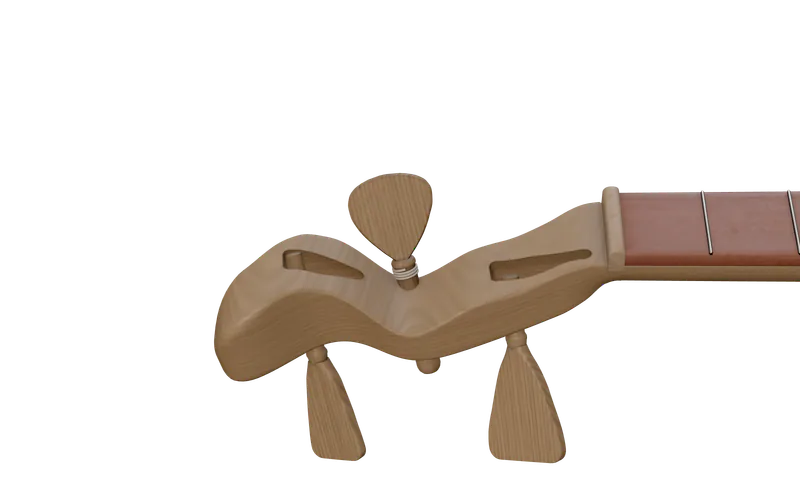
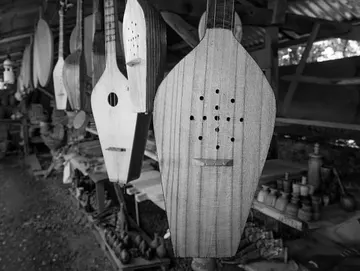
A three-string Kartli-Kakhetian panduri, carved in one piece, with a seventeen-hole rosette.
The studio
Kostava Creative is a small studio from Georgia. We sampled the panduri, wrote the engine that plays it and build the tools to mix it.
It started with a paper piano and a grandmother’s bowls struck with hazelnut sticks. Years later, one brother wrote code and the other recorded sound. When a virtual panduri finally played back, that was the first sound we kept.


Three voices, one mix
In a Georgian song the bass holds the ground and two voices move above it. In a mix that room has to be made, and an equaliser is how you make it.


Audio EffectsComing soon
A precision equaliser with dynamic and spectral bands, sidechain and LFO modulation.
Dynamic EQ · Spectral dynamics · Sidechain · LFO modulation
AU · VST3 · Standalone
See Kostava EQ ↓The arsenal
Panduri, the Georgian lute we sampled. Kostava EQ, the precision equaliser we built alongside it.
The First Chapter of Georgian Cinematic Sound.
Launch price$29.99$39.99 after launch
VST3 · AU · Standalone
14 days. The full instrument, on one machine.

Chapter one: the panduri. Read the guide.
12-TET out of the box. Seven tuning presets on a switch, from Gelzer 7-EDO to Erkomaishvili.
A precision equaliser with dynamic bands, LFO modulation and four snapshots.
AU · VST3 · Standalone
 Coming SoonVST3 · AU · Standalone
The First Chapter of Georgian Cinematic Sound.
Launch price$29.99$39.99 after launch
Journal
The full story of the instrument you just built.
It is one of the oldest continuously-played instruments on Earth — and most of the world has never heard of it. The panduri (ფანდური) is the three-string fretted lute of Eastern Georgia, a 5,000-year-old descendant of the Sumerian pantur and the ancient Greek pandoura. This is the complete guide: its history, anatomy, tunings, regional variants, the heroic poetry it carries, the household rituals it marks, and its place in Georgian life from the 5th century to today.
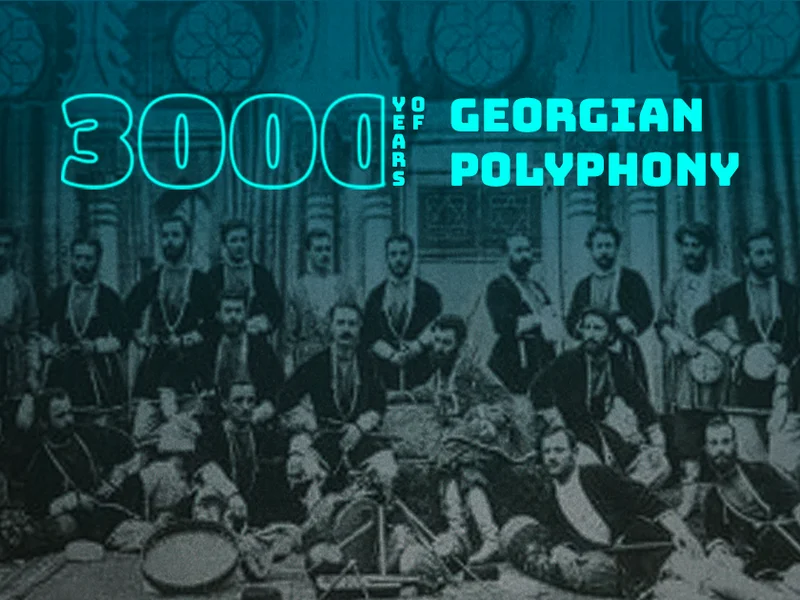
3,000 years ago, Georgian polyphony engineered a flawless audio-engineering algorithm — natural Stem Routing, microtonal tension, and Pitch Drift that Hollywood composers like Hildur Guðnadóttir and Hans Zimmer are still chasing today. Discover how three voices fill the full audio spectrum without a single frequency conflict — and three practical techniques you can use in your DAW immediately.
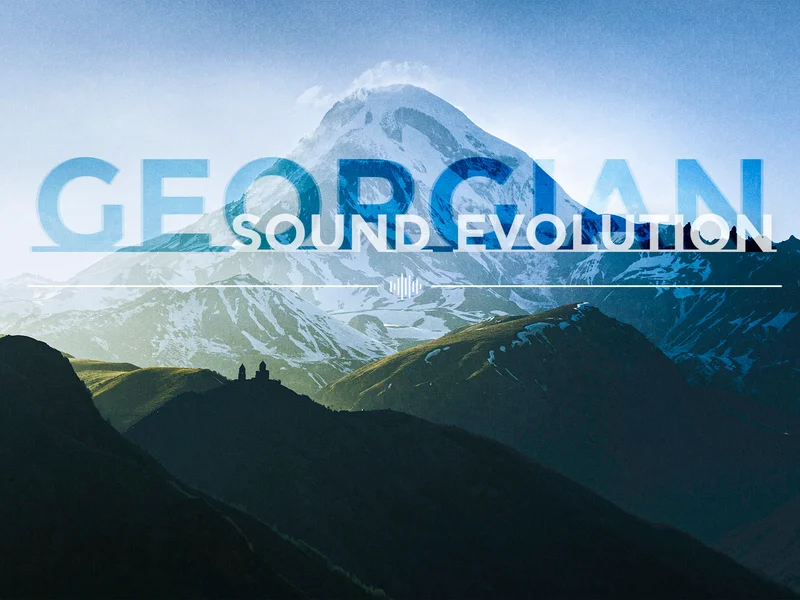
Kostava Creative is starting a new era for Georgian sound. Our goal is to turn traditional instruments and polyphony into professional virtual (VST) instruments. Meet our vision, the grand project launched by the two brothers, and the first flagship — Panduri v1.0. Join us on a great audio expedition!
First to hear it
One email when it is ready. No noise in between.
Terrain produced using Copernicus WorldDEM-30 © DLR e.V. 2010-2014 and © Airbus Defence and Space GmbH 2014-2018 provided under COPERNICUS by the European Union and ESA; all rights reserved.Caucasus terrain produced using Copernicus WorldDEM™-90 © DLR e.V. 2010-2014 and © Airbus Defence and Space GmbH 2014-2018 provided under COPERNICUS by the European Union and ESA; all rights reserved. The organisations in charge of the Copernicus programme by law or by delegation do not incur any liability for any use of the Copernicus WorldDEM™-90.Map data: Natural Earth.